

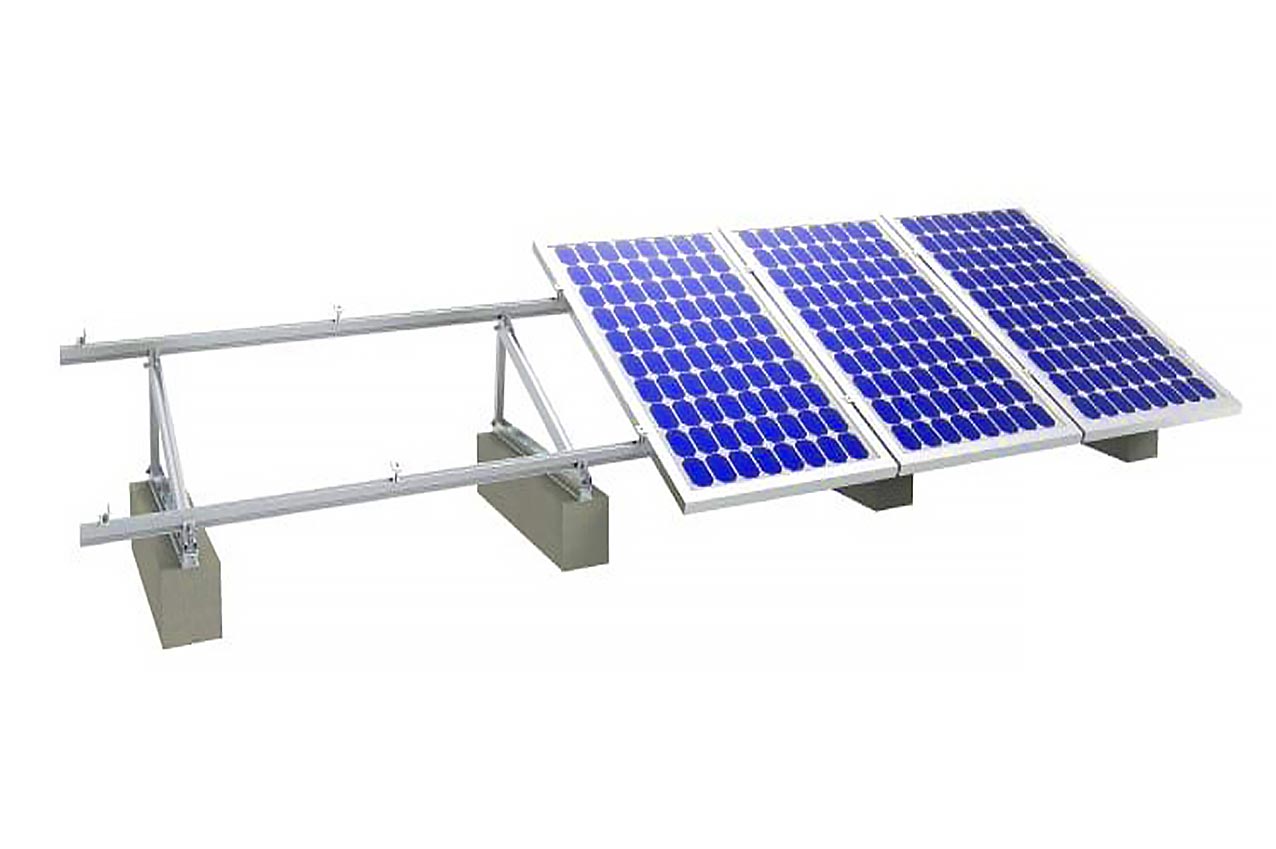
Description
|
Flat Roof Mounting System Detailed Specifications |
|
||
|
Key Components and Specifications: |
|||
|
– |
Ballasted Systems: |
||
|
|
The most common type for flat roofs, these systems use weights (ballasts) to anchor the mounting structure and solar panels, eliminating the need for roof penetrations. |
||
|
– |
Tilt and Orientation: |
||
|
|
Systems can be designed for various tilt angles (e.g., 10-15°, 15-30°, or 30-60°) to optimize solar energy capture. They can also accommodate both landscape and portrait module orientations. |
||
|
– |
Materials: |
||
|
|
Common materials include aluminum, stainless steel (SUS304), and hot-dip galvanized steel (Q235B, Q355B). |
||
|
– |
Wind and Snow Load: |
||
|
|
The system should be designed to withstand specific wind speeds (e.g., <50m/s) and snow loads (e.g., <1.2KN/m²). |
||
|
– |
Module Compatibility: |
||
|
|
Systems are designed to accommodate standard framed and unframed solar panels. |
||
|
– |
Installation: |
||
|
|
Installation should minimize on-site machining and ensure proper drainage of the roof. |
||
|
– |
Warranty: |
||
|
|
Manufacturers typically offer warranties on both the mounting system (e.g., 10-year manufacturer’s warranty) and the service life (e.g., 20-year service life). |
||
|
– |
Safety and Compliance: |
||
|
|
Systems should be designed to integrate with lightning protection and equipotential bonding systems. |
||
|
|
|||
|
Example System Specifications (from a specific provider): |
|||
|
– |
System Type: Ballasted flat roof photovoltaic mounting system |
||
|
– |
Module Orientation: East/West, North/South, or South |
||
|
– |
Nominal Module Inclination: At least 13° |
||
|
– |
Materials: Aluminum, V2A, PE |
||
|
– |
Max. Module Field Length: Minimum 17 meters, or 34 meters with a floating bearing |
||
|
– |
Min. Distance to Roof Edge: Maximum 500mm |
||
|
– |
Permissible Module Width: 920mm – 1200mm |
||
|
– |
Clamping: Clamping on the short side of the module to reduce the number of clamps |
||
|
|
|||
|
Important Considerations: |
|||
|
– |
Roof Type and Condition: |
||
|
|
Ensure the roof is suitable for the chosen mounting system (e.g., pressure-resistant, suitable slope). |
||
|
– |
Local Regulations: |
||
|
|
Consult local building codes and regulations regarding solar panel installations. |
||
|
– |
Professional Installation: |
||
|
|
Flat roof solar panel installations should be done by qualified professionals. |
||
|
|
|||
|
Specification of Flat Roof Mounting System for Solar Panels |
|||
|
Item |
Description / Specification |
||
|
Mounting Type |
Flat Roof Mounting System (Ballasted / Non-penetrating / Anchored) |
||
|
Tilt Angle Options |
5° – 30° (Fixed or adjustable based on energy optimization) |
||
|
Structure Material |
Aluminum Alloy (AL6005-T5) or Hot-Dip Galvanized Steel |
||
|
Fasteners Material |
Stainless Steel (SUS304) |
||
|
Mounting Orientation |
Portrait or Landscape |
||
|
Mounting Base Options |
Ballast trays, concrete blocks, or roof-penetrating anchors |
||
|
Panel Fixation |
Mid-clamps and End-clamps with pre-assembled kits |
||
|
Roof Compatibility |
Concrete Roofs, Membrane Roofs, Bitumen, EPDM, TPO |
||
|
Waterproofing |
No roof penetration required in ballasted systems; flashing if penetrated |
||
|
Wind Load Resistance |
Up to 180 km/h (based on ballast weight and system design) |
||
|
Snow Load Resistance |
Up to 2.0 kN/m² (location dependent) |
||
|
Drainage Considerations |
System designed to maintain natural water flow on the roof |
||
|
Fire Safety Compliance |
UL 2703, IEC 61730 |
||
|
Installation Method |
Tool-free assembly possible; modular racking design |
||
|
Cable Management |
Integrated cable trays or clips |
||
|
Expected Lifespan |
≥ 25 years |
||
|
Compliance Standards |
AS/NZS 1170, UL 2703, IEC 61215, DIN 1055 |
||
|
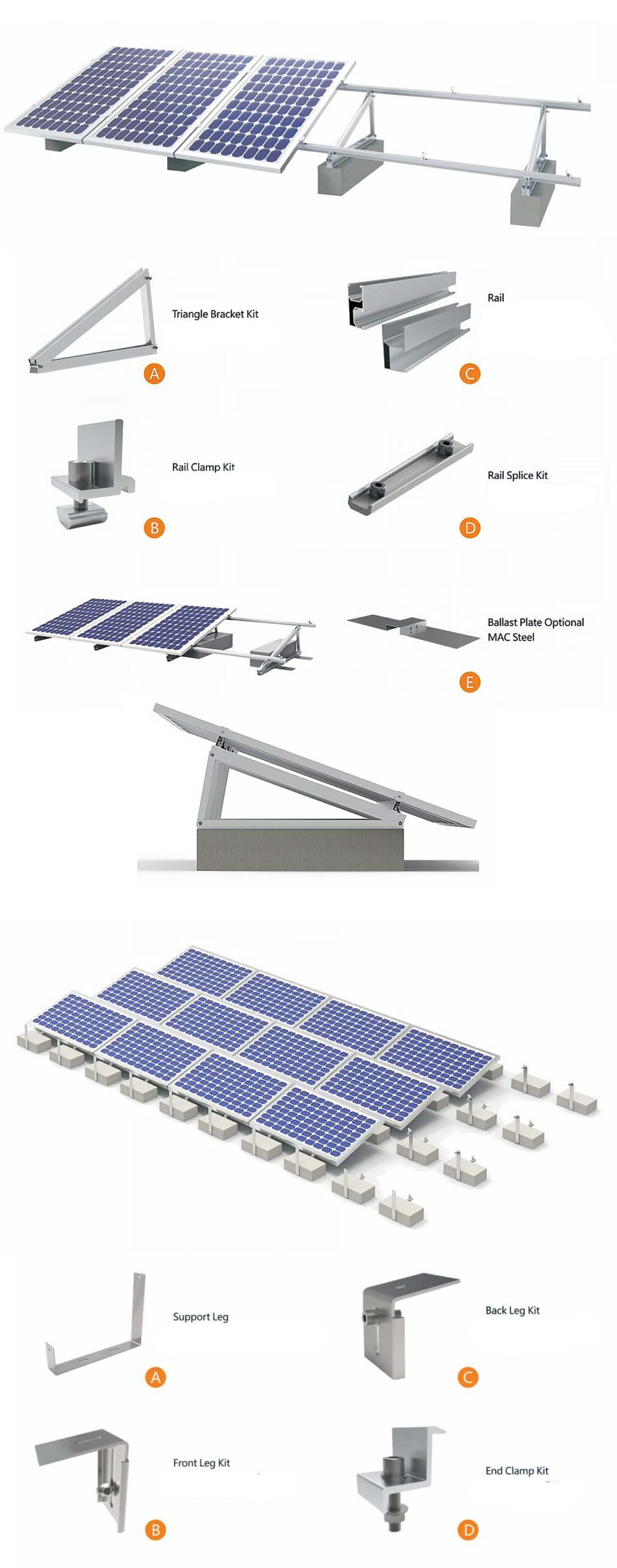
ST (TC300) Tripod Concrete Roof Solar Mounting System |
|||
 |
|||
|
Product Characteristics |
|||
|
Model No. |
(TC300) Tripod Concrete Roof Solar |
||
|
Product Warranty |
15 Years |
||
|
System Overview |
|||
|
Type |
Flat Roof |
||
|
Mounting System Arrangement |
Rows |
||
|
Panel Framing |
Framed, Unframed |
||
|
Panel Orientation |
Portrait, Landscape |
||
|
Roof Types |
Concrete |
||
|
Tilt Angle |
0-45 ° |
||
|
Wind Load |
216 km/h |
||
|
Snow Load |
1.4 kN/m2 |
||
|
General Data |
|||
|
Supporting Structure Materials |
Aluminium |
||
|
Small Parts Materials |
Aluminium, Stainless Steel |
||